Culture Legacy song file
Soul Makossa
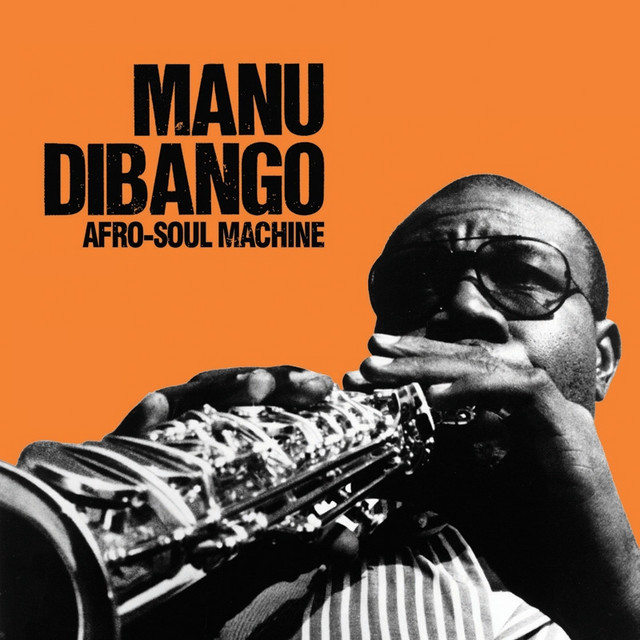
"Soul Makossa" was never meant to be a global hit. In 1972 Manu Dibango recorded it as the B-side of "Hymne de la 8e Coupe d'Afrique des Nations" — an official anthem celebrating the Came...

Messiane Zapfack
The story
The story of Soul Makossa
"Soul Makossa" was never meant to be a global hit. In 1972 Manu Dibango recorded it as the B-side of "Hymne de la 8e Coupe d'Afrique des Nations" — an official anthem celebrating the Cameroon national football team's run to the quarter-finals of the Africa Cup of Nations. The A-side was the duty. The B-side was where he stretched out.
The lyrics were written by Cameroonian poet and musicologist S.M. Eno Belinga, almost entirely in Duala (the dialect continuum of the Sawa peoples of Cameroon's Littoral region), and the recording is dominated by Dibango's saxophone over a propulsive makossa groove. The chanted refrain — "ma-ma-ko, ma-ma-sa, ma-ko ma-ko-ssa" — wasn't designed to be the hook. It became one of the most-sampled phrases in recorded music history almost by accident.
Read full story
The song crossed the Atlantic in 1972 when DJ David Mancuso found a copy in a Brooklyn West Indian record store and started playing it at his Loft parties in downtown New York. Word travelled fast. The few imported copies in Manhattan sold out within weeks. Atlantic Records picked up US distribution in 1973; the single went gold and Dibango received two Grammy nominations at the 1974 ceremony — Best R&B Instrumental Performance and Best Instrumental Composition. To this day, Soul Makossa is widely cited as a foundational record of the proto-disco era.
Then came the sampling. In 1982 Michael Jackson lifted the chanted hook for "Wanna Be Startin' Somethin'" on Thriller — without permission, without credit. Dibango sued; Jackson acknowledged the borrowing and settled out of court for one million French francs. In 2007 Rihanna interpolated the same line via Jackson on "Don't Stop the Music." Dibango filed a follow-up lawsuit in 2009, but it failed because he had already secured a writer's credit on the Rihanna track in 2008 — which the court found exhausted his claim.
The sample lineage continues. Hip-hop, R&B, house, Afrobeats: the "mama-ko, mama-sa" cadence has been quoted, reworked and re-sampled across more than a hundred records. The most-sampled African song in history began as a B-side anthem for a football tournament — and it remains the single clearest example of why a platform that documents the filiation of African music matters. When the credit travels with the sample, the value can travel home.
Lyric reader
Read, decode, contribute
[Intro / chanted refrain]
Mama-ko, mama-sa, ma-ko ma-ko-ssa
Mama-ko, mama-sa, ma-ko ma-ko-ssa
[Vocal phrase]
A-ko Makossa, soul Makossa
Makossa, soul Makossa
[Saxophone-led instrumental]
(Manu Dibango sax improvisation over the makossa groove)
[Refrain — chanted again]
Mama-ko, mama-sa, ma-ko ma-ko-ssa
Mama-ko, mama-sa, ma-ko ma-ko-ssa
[Outro]
Soul Makossa, soul Makossa…
Listen Hub
3 platformsDiscussion
Share memories, debate translations, drop production notes.
Log in to join the discussion.
- Messiane Zapfack
Apr 28, 2026
this song is so increadible