Makossaduala / french
Lyric note
“[Verse] / Belembete, mwana sawa”
Co-led single with Eduke — a generational Makossa hand-off that pairs Ben Decca's seasoned phrasing with the younger vocalist's lift.
Belembete
Ben Decca
0 notesAdd cultural note
Search across song titles, lyrics, annotated phrases, cultural explanations, and artist names — all at once.
Lyric note
“[Verse] / Belembete, mwana sawa”
Co-led single with Eduke — a generational Makossa hand-off that pairs Ben Decca's seasoned phrasing with the younger vocalist's lift.
Ben Decca
Lyric note
“[Intro] / Mulema mwam, na sengi wa”
A signature Makossa-Love ballad: heartbreak rendered in Ben Decca's silky upper register over a gently shuffling 6/8 groove.
Ben Decca
Lyric note
“Every song has a line waiting for context.”
Trademark Petit Pays — playful jealousy turned into a Makossa-Love dancefloor anthem that defined nineties Cameroonian nightlife.
Petit Pays
Lyric note
“[Verse] / Mboa su, mboa sawa”
A nineties Sawa-pride anthem — Ben Decca naming the homeland over a brisk Makossa shuffle.
Ben Decca
Lyric note
“[Intro] / Yetena oa, na bisè la mboa”
The breakout EP track that anchored Ben Decca's solo identity — a tender Duala-language ballad over restrained Makossa guitar work.
Ben Decca
Lyric note
“Every song has a line waiting for context.”
A muscular afro-funk groove that translated Makossa's rhythmic vocabulary for international jazz festivals.
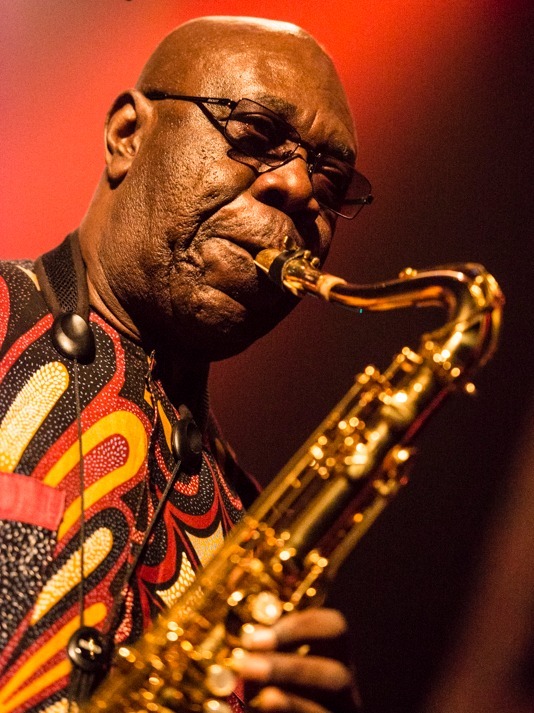
Manu Dibango
Lyric note
“[Intro / chanted refrain] / Mama-ko, mama-sa, ma-ko ma-ko-ssa”
"Soul Makossa" was never meant to be a global hit. In 1972 Manu Dibango recorded it as the B-side of "Hymne de la 8e Coupe d'Afrique des Nations" — an official anthem celebrating the Cameroon national football team's run to the quarter-finals of the Africa Cup of Nations. The A-side was the duty. The B-side was where he stretched out. The lyrics were written by Cameroonian poet and musicologist S.M. Eno Belinga, almost entirely in Duala (the dialect continuum of the Sawa peoples of Cameroon's Littoral region), and the recording is dominated by Dibango's saxophone over a propulsive makossa groove. The chanted refrain — "ma-ma-ko, ma-ma-sa, ma-ko ma-ko-ssa" — wasn't designed to be the hook. It became one of the most-sampled phrases in recorded music history almost by accident. The song crossed the Atlantic in 1972 when DJ David Mancuso found a copy in a Brooklyn West Indian record store and started playing it at his Loft parties in downtown New York. Word travelled fast. The few imported copies in Manhattan sold out within weeks. Atlantic Records picked up US distribution in 1973; the single went gold and Dibango received two Grammy nominations at the 1974 ceremony — Best R&B Instrumental Performance and Best Instrumental Composition. To this day, Soul Makossa is widely cited as a foundational record of the proto-disco era. Then came the sampling. In 1982 Michael Jackson lifted the chanted hook for "Wanna Be Startin' Somethin'" on Thriller — without permission, without credit. Dibango sued; Jackson acknowledged the borrowing and settled out of court for one million French francs. In 2007 Rihanna interpolated the same line via Jackson on "Don't Stop the Music." Dibango filed a follow-up lawsuit in 2009, but it failed because he had already secured a writer's credit on the Rihanna track in 2008 — which the court found exhausted his claim. The sample lineage continues. Hip-hop, R&B, house, Afrobeats: the "mama-ko, mama-sa" cadence has been quoted, reworked and re-sampled across more than a hundred records. The most-sampled African song in history began as a B-side anthem for a football tournament — and it remains the single clearest example of why a platform that documents the filiation of African music matters. When the credit travels with the sample, the value can travel home.
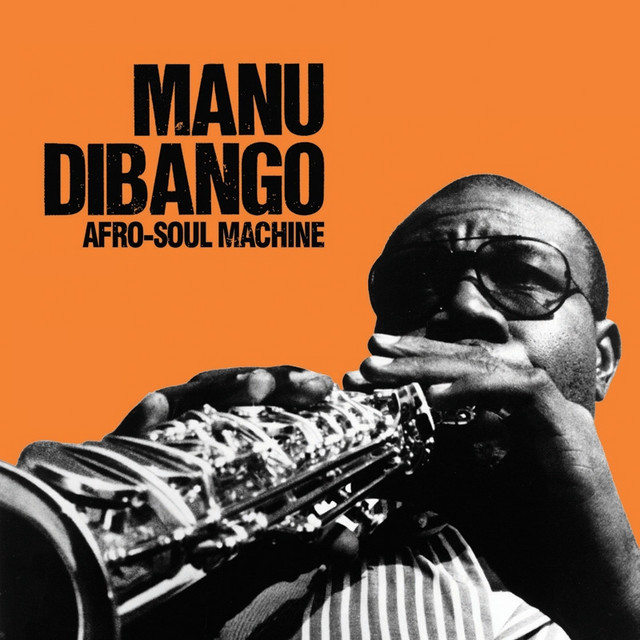
Manu Dibango
“Makossa”
Makossa is a Cameroonian urban dance style that emerged from the Sawa traditions of Douala in the 1950s–60s. The name derives from a Duala word meaning "I dance" (kossa = dance). By 1972 makossa had become Cameroon's defining popular music — a syncopated four-on-the-floor rhythm built on rhythm guitar, electric bass, horns and percussion. Dibango's "Soul Makossa" introduced the form to a global audience.
Has source
“Manu Dibango sax improvisation”
The full studio cut runs almost five minutes, of which roughly three are Dibango's saxophone improvisation over the makossa groove. This is the section that hooked DJ David Mancuso when he found the import in a Brooklyn record store in 1972 and started playing it at his Loft parties — the long break gave dancers room to move and DJs room to ride the groove, which is precisely the architecture that later defined disco and early house.
Has source
“A-ko Makossa”
In Duala, "a-ko" is a vocative / interjection used in call-and-response — roughly "come, makossa" or "let's makossa." Dibango pivots from the chanted opening into this call to invite the dance floor in. The phrase deliberately blurs the line between sung text and rhythmic onomatopoeia, which is part of why the hook is so portable across languages and contexts.
“soul Makossa”
The title pairs the local genre (makossa) with the imported genre name (soul), declaring the fusion explicitly. Dibango wasn't hiding the influence — by 1972 he had spent two decades absorbing Duke Ellington, Sidney Bechet and Louis Armstrong in France, and Paris's soul-club scene was peaking. Soul Makossa is a manifesto for the proto-Afrofunk era: African rhythm, jazz-trained horns, American funk-soul vocabulary.
Has source
“Soul Makossa, soul Makossa”
The fade-out reprise. Originally pressed as the B-side of the official anthem for Cameroon's run at the 8th Africa Cup of Nations (won by Congo-Brazzaville in 1972 — Cameroon reached the quarter-finals). The A-side faded into obscurity; the B-side became a Grammy-nominated international hit, then a sample lineage spanning Michael Jackson (1982), Rihanna (2007), and over a hundred subsequent records.
Has source
“237”
Cameroon's international dialling code, used across Cameroonian hip-hop and Makossa as shorthand for "Cameroon / Cameroonian." Recurs in Tenor's catalogue as a national signature.
“mulema mwam”
Duala for "my heart." Standard endearment in Sawa love-song lyrics; functions like "mon coeur" in French Makossa-Love writing.
“Sawa for life”
A late-2010s Camfranglais formulation that stitches English diaspora slang ("X for life") onto a Sawa identity claim. Marks the moment Makossa elders began writing for a globalised, code-mixing audience.
“na timba o wa”
Duala for "I return to you." Final-line declaration typical of Makossa songs about exile and the diaspora homecoming — both literal (visiting Douala) and emotional.
“na lela”
Duala "I cry / I weep." The repetition in the chorus ("na lela na lela") is a classic Makossa-Love phrasing device — incantatory, almost prayer-like.
“Mboa te garde une place”
Code-switching between French syntax and the Duala noun "mboa." The homeland is personified as the one who holds your spot — a recurring image in Makossa lyrics about return and exile.